The American Revolution grew out of more than a decade of escalating tension between Britain and its thirteen American colonies, driven by disputes over taxation, self-government, trade, and the rights of colonists as British subjects. No single event caused the Revolution. Instead, a series of British policies and colonial responses pushed the two sides further and further apart until armed conflict became unavoidable. Understanding the causes of the Revolution means understanding how a population that considered itself loyally British came to believe that independence was their only option.
What Was the American Revolution?
The American Revolution was the political and military struggle through which the Thirteen Colonies broke free from British rule and established the United States of America. Open fighting began in April of 1775 at Lexington and Concord, and the colonies formally declared independence on July 4th, 1776. The war lasted until 1783. But the Revolution itself began years before the first shots were fired, in the minds and grievances of colonists who believed that their fundamental rights as British subjects were being violated. The causes of the Revolution were political, economic, ideological, and personal, and they built on one another over a period of roughly twelve years.
The Legacy of Salutary Neglect
One of the most important underlying causes of the American Revolution was the abrupt end of a long period of British policy known as salutary neglect. For most of the colonial period, Britain had allowed the American colonies to govern themselves in practical matters. Colonial assemblies levied taxes, passed local laws, and managed their own affairs with relatively little interference from London. Colonists grew accustomed to this freedom and came to regard self-government as a fundamental right rather than a privilege granted by the Crown.
After the French and Indian War ended in 1763, Britain changed course. With an enormous national debt and a vast new empire to manage, the British government decided it was time for the colonies to contribute more directly to their own defense and to the costs of the empire. This shift from neglect to active control was jarring and unwelcome. Policies that Parliament saw as reasonable adjustments to a new imperial reality struck colonists as an attack on liberties they had exercised for generations.
The French and Indian War and British Debt
The most direct trigger for the new British policies was the cost of the French and Indian War, the North American theater of the Seven Years’ War, which lasted from 1754 to 1763. Britain won the war decisively, gaining control of Canada and all French territory east of the Mississippi River. But the victory came at a staggering financial cost. Britain’s national debt nearly doubled during the war, reaching roughly 140 million pounds by its end. The British government concluded that the colonies, which had benefited directly from the war’s outcome, should help pay for it.
This logic seemed reasonable in London. It provoked outrage in the colonies. Colonists believed they had already contributed to the war effort through military service and their own taxes, and they saw no reason why a parliament in which they had no elected representatives should be able to impose new financial obligations on them.
Taxation Without Representation
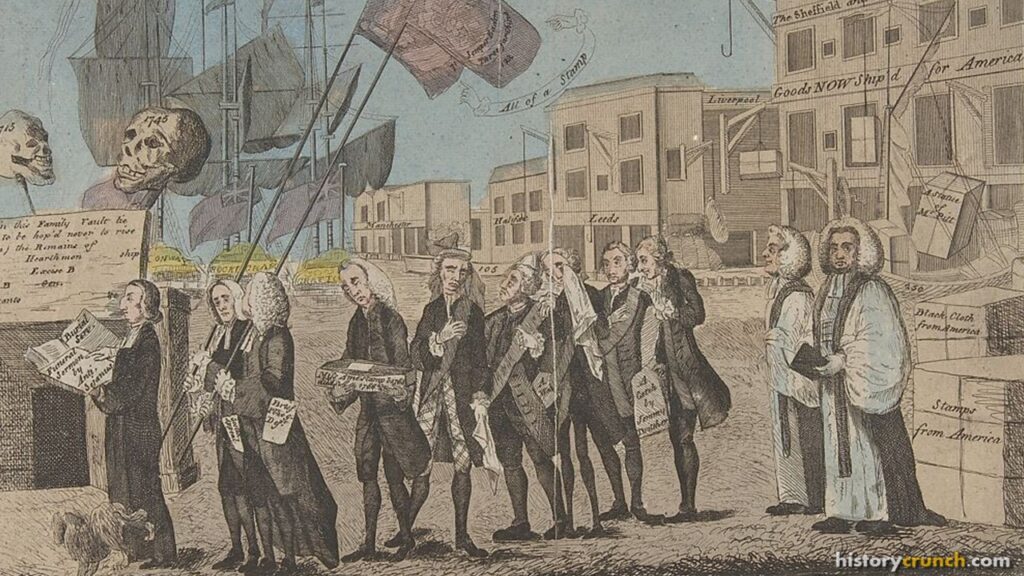
The most explosive cause of the American Revolution was the question of taxation. Parliament began passing a series of revenue-raising laws targeting the colonies starting in 1764. The Sugar Act of 1764 placed duties on sugar, molasses, and other goods. The Stamp Act of 1765 went further, imposing the first direct internal tax on the colonies, requiring tax stamps on a wide range of printed materials from legal documents to newspapers to playing cards.
Colonists did not simply disagree to paying taxes. They objected to being taxed by a parliament in which they had no elected members. The principle that people cannot be taxed without the consent of their own representatives was deeply rooted in English constitutional tradition, and colonists argued that Parliament had no authority to tax them because they sent no members to Parliament. The phrase “no taxation without representation,” widely attributed to Boston lawyer James Otis Jr., became the rallying cry of the colonial resistance and remained the central argument against British rule for the following decade.
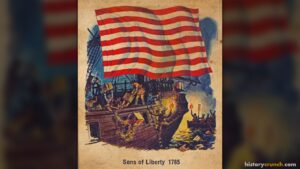
The Stamp Act produced immediate and fierce resistance. Colonial assemblies passed resolutions condemning it. The Sons of Liberty organized street protests and boycotts. The Stamp Act Congress of 1765 brought delegates from nine colonies together to formally protest the law. Parliament repealed the Stamp Act in 1766, but on the same day passed the Declaratory Act, asserting that it had the right to pass any laws it wished binding on the colonies “in all cases whatsoever.” This made clear that Britain had no intention of giving up its claimed authority to tax the colonies. It had simply retreated temporarily.
The Townshend Acts of 1767 proved the point, imposing new import duties on glass, lead, paint, paper, and tea and creating a new customs board in Boston to enforce them. Colonists responded with another wave of boycotts and protests, including the influential Letters from a Farmer in Pennsylvania by John Dickinson, which argued that any parliamentary tax on the colonies for the purpose of raising revenue was unconstitutional regardless of its form. Parliament repealed most of the Townshend duties in 1770 but again kept the tea tax in place as a statement of principle.
The Breakdown of Trust – The Boston Massacre and Tea Party
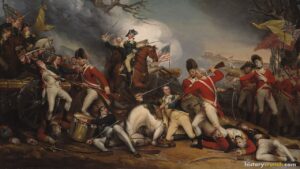
Beyond the specific disputes over taxation, a series of violent and provocative events steadily eroded whatever trust remained between the colonies and Britain. The arrival of British troops in Boston in 1768 to enforce the Townshend Acts created constant friction between soldiers and civilians. On the night of March 5th, 1770, British soldiers fired into a crowd on King Street, killing five colonists in what became known as the Boston Massacre. Patriots used the killings to argue that Britain was prepared to use military violence against its own colonial subjects. The event deepened colonial distrust of British intentions and made peaceful reconciliation more difficult.
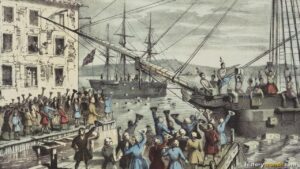
Three years later, in December of 1773, the Boston Tea Party brought tensions to a new high. When Parliament passed the Tea Act, giving the British East India Company a monopoly on colonial tea sales while keeping the Townshend tea tax in place, members of the Sons of Liberty boarded three ships in Boston Harbor and dumped 342 chests of tea into the water. The destruction of property worth approximately £18,000 was a direct and deliberate act of defiance, and Britain’s response transformed a local confrontation into a continental crisis.
The Intolerable Acts and Colonial Unity
Parliament’s response to the Boston Tea Party was the Coercive Acts of 1774, which colonists immediately labeled the Intolerable Acts. The laws closed the port of Boston, stripped Massachusetts of its self-government, allowed British officials to be tried in Britain for crimes committed in the colonies, and required colonists throughout the continent to house British troops. They were designed to punish Massachusetts and force submission.
Instead, they created exactly the colonial unity Britain feared most. Colonists across all thirteen colonies recognized that if Parliament could destroy the government of Massachusetts, it could do the same to any of them. The Intolerable Acts produced outrage that swept far beyond Boston and convinced many moderate colonists who had previously hoped for reconciliation that Britain could not be trusted to honor colonial rights. The First Continental Congress met in September of 1774 in direct response to the Intolerable Acts, bringing together delegates from twelve colonies to coordinate resistance. Within months, colonial militias were drilling in preparation for conflict.
Ideological Causes – Enlightenment Ideas and Colonial Identity
The causes of the American Revolution were also deeply ideological. Colonists had been shaped by Enlightenment ideas about natural rights, government by consent, and the limits of political authority. The writings of John Locke, who argued that legitimate government depends on the consent of the governed and that people have the right to resist tyranny, were widely read and discussed in colonial America. Thomas Paine’s pamphlet Common Sense, published in January of 1776, made these ideas accessible to a mass audience and argued plainly that monarchy itself was an unjust form of government.
Alongside these philosophical influences, a distinct colonial identity had been developing for generations. People whose families had lived in America for a century or more did not think of themselves the same way that people in London thought about them. They had built their own communities, their own governments, and their own ways of life. When Britain began treating them as subordinate subjects to be managed and taxed rather than as self-governing British people, many colonists concluded that the relationship had become incompatible with their sense of who they were.
The Point of No Return
By the time the Intolerable Acts were passed, most paths back to peaceful resolution had closed. King George III had declared the colonies in rebellion in August of 1775. The Olive Branch Petition, in which the Continental Congress made a final appeal to the king for reconciliation in July of 1775, was rejected without reply. Each British attempt to enforce its authority by force, whether through taxes, troop deployments, or punitive legislation, produced a colonial response that hardened resistance further. Each colonial act of defiance, from the Stamp Act protests to the Boston Tea Party, prompted a British reaction that pushed moderates toward the Patriot position.